Wood vs Composite Decking: Pros and Cons Explained
Deciding between wood and composite decking is a big choice for homeowners planning an outdoor upgrade. The material you pick affects your budget, maintenance routine, and how much you'll enjoy your deck. If you're weighing options for a new deck or a replacement, this guide breaks down the differences so you can choose confidently.
If you're thinking about a complete outdoor makeover, it's also good to consider more than just the deck boards. Our deck installation services and outdoor living spaces options ensure everything works together from the start. If you're looking at a replacement, deck remodeling might be better than fixing an old deck that's past its prime.
We'll compare cost, looks, lifespan, upkeep, climate response, and sustainability. Plus, we'll touch on product trends, expert insights, and a real-world example to connect the facts to a real project. For more context on product performance and trends, summaries from Travelers and Forbes Home are helpful.
What Homeowners Usually Want to Know First
Is wood or composite cheaper?
Generally, wood costs less upfront. Research shows composite decking ranges from about $5 to $18 per square foot, while wood is around $3 to $12 per square foot. This matters if you're building a large deck or have a tight budget. But upfront cost isn't the whole story; maintenance and lifespan can change the real cost over time.
Composite is often pricier initially, but you might save on staining, sealing, replacing boards, and labor over the years. Wood might seem like the better deal at first, but it can become more expensive over time due to ongoing upkeep. If you're balancing budget and value, compare pressure-treated decks with composite before deciding.
Which option lasts longer?
Composite decking usually outlasts wood, often lasting 25 to 50 years with proper installation and care. Wood decks typically last 10 to 25 years, depending on the type of wood, exposure to weather, installation quality, and maintenance. Lifespan matters, especially if you want a deck that will last through many seasons without major repairs.
But lifespan isn't only about the material. Proper framing, flashing, fasteners, ventilation, and drainage all affect how well a deck holds up. When choosing a new build, working with experienced contractors on deck installation can protect your investment, no matter the surface material. To understand structural risks and common priorities, our guide on things to think about before building a multi-level deck might be useful.
Wood Decking: Where It Shines and Where It Falls Short
Natural beauty and familiar appeal
Wood is popular because it looks and feels genuine. Many love the grain, warmth, and slight variations of natural boards. Cedar, redwood, and pressure-treated pine each have their own character, and wood can be stained in various colors to match siding, trim, and outdoor furniture. For a classic backyard look, wood is hard to beat.
It's also easier to customize as you go. If you want to change the stain color, update railings, or refresh the finish, wood is forgiving. For a deck meant to match a traditional home or blend naturally into a landscape, wood offers the aesthetic flexibility that composite sometimes can't match perfectly.
Maintenance requirements
The biggest downside of wood is maintenance. Most wood decks need staining or sealing every one to three years, depending on sun exposure, moisture, and foot traffic. Without regular care, wood can fade, splinter, warp, or become prone to rot and insects, making maintenance crucial for protecting the structure.
If you live in a humid area, pay attention to moisture management. Even if the deck boards look fine, hidden problems can develop if water gets trapped near the framing. The U.S. Forest Service offers educational resources about wood behavior and outdoor exposure, useful for understanding how natural materials respond to the environment. If your deck shows wear, deck railing repair and small upgrades can buy time, but won't solve deeper decay issues.
Best use cases for wood
Wood is smart for those who value low upfront costs, natural looks, and don't mind upkeep. It's great for smaller decks, weekend properties, or those planning to remodel within a decade. It's also ideal for designs aiming for a warm, traditional, or rustic vibe.
For practical, cost-conscious builds, pressure-treated wood remains popular as it resists rot and insects better than untreated lumber. Our pressure-treated decks service is excellent for those wanting a durable wood solution without jumping to composite prices. If pairing the deck with a covered entry or transition area, porch construction can create a cohesive design.
Composite Decking: Why It Has Become So Popular
Modern durability and improved performance
Composite decking has improved a lot. Manufacturers now make boards with protective outer shells bonded to composite cores, boosting resistance to stains, fading, scratches, and mold. Mineral-based composite products offer more stability and better resistance to warping. These advancements make the composite appealing to those wanting better performance with less maintenance.
Practically speaking, the appeal is clear. Composite withstands moisture, sunlight, and daily wear better than many wood surfaces. It's perfect for busy families, frequent entertainers, and those wanting a polished finish that lasts. For specialized low-maintenance options, our composite decks service focuses on modern materials supporting durability and clean design.
Low maintenance, not no maintenance
Composite decking is often called low-maintenance, but it isn't maintenance-free. It needs occasional cleaning with soap and water, and spills should be cleaned up quickly to avoid stains. But this routine is much simpler than the cycle of sanding, sealing, and refinishing wood often requires. For many, that reduced effort is the deciding factor.
Experts at Lowe’s note that composite can get hot in direct sunlight, something to consider for bare feet, pets, or poolside installations. Thoughtful design can help manage this by choosing lighter colors, adding shade, or orienting the deck to reduce harsh sun. If shade and comfort are priorities, gazebo and pergola construction can make a composite deck more usable during hot months.
Style options and design flexibility
Composite isn't limited to a single flat, artificial look anymore. Today's products come in many colors, textures, and board profiles that mimic wood more convincingly than older composites. Many love the consistency, especially for a modern outdoor living space with clean lines and a premium finish. That visual consistency is why composite is often chosen for high-use family decks and entertainment areas.
Still, some prefer wood's unique character. If you like organic texture and visible grain variation, wood might feel more authentic. But if you aim to coordinate with sleek railings, modern furniture, and other upgrades, composite offers a more uniform visual experience. For design ideas that work with either material, check out our post on deck upgrades that transform comfort and style.
How Climate, Moisture, and Sun Exposure Affect Your Choice
Why weather matters more than many homeowners realize
Deck material choice should reflect local weather. In humid areas, wood absorbs moisture, leading to faster decay if airflow is poor or maintenance slips. In sunny spots, some composite boards may get hotter than wood and may need shade or lighter colors to stay comfortable. Understanding the climate helps choose a material that fits how you live, not just looks good in a showroom.
This is crucial in areas where seasonal shifts create cycles of expansion, contraction, moisture, and drying. A deck exposed to rain, humidity, and direct summer heat ages differently from one in a dry climate. For more on weather impacts, see our article on weatherproofing decks for longer lifespan in Franklin, TN for how local conditions affect performance and maintenance planning.
Durability concerns in humid environments
Composite resists rot, insects, and moisture, giving it an edge in damp areas. It's not indestructible, but it handles exposure better than wood. Wood can work in humid regions, but needs more maintenance and careful detailing to prevent water damage.
Proper installation is as important as material selection. Boards should be installed with drainage and ventilation in mind, and structures should be inspected regularly for hidden deterioration. For a long-lasting structure, learn more about safe building practices through our deck remodeling and deck railing repair services, especially for older decks needing structural attention.
Cost, Value, and Long-Term Return
Comparing the real cost over time
Initially, wood seems cheaper. But long-term value changes once you add stains, sealers, replacements, labor, and potential earlier replacement. Composite's higher upfront price can be balanced out by lower maintenance and longer service life. Over time, many find the cost difference narrows more than expected.
Think of it as an annual ownership cost, not just the purchase price. If a deck needs fewer treatments and replacements, the expense becomes more predictable. This predictability matters to those wanting to avoid surprise repairs and recurring upkeep bills. It also helps contractors design projects meant to deliver value over many years.
What the numbers suggest
Industry estimates say composite decks last about twice as long as wood decks. This means fewer replacements and less disruption. A homeowner investing in composite may enjoy years of use with only occasional cleaning, while a wood owner might budget for periodic refinishing and board replacement. The right choice depends on whether you value lower initial cost or lower long-term effort.
One project in Franklin, TN, provides an example. A homeowner chose composite decking to reduce maintenance time and improve durability, resulting in a 30% decrease in annual upkeep costs and a 50% increase in the deck's lifespan compared to previous wood decking. For those wanting a low-stress outdoor space, this outcome can be more valuable than saving a few dollars at the start. If your property is ready for a refresh, Trex decks and railings might be a strong option to consider during planning.
When wood still makes financial sense
Wood is sensible when planning to sell soon, upgrading a smaller deck, or keeping initial costs low. It's useful for projects where a natural look matters more than long-term maintenance savings. In those cases, a pressure-treated or other wood-based solution can be appropriate and financially responsible.
Before deciding, compare your deck with other outdoor goals. If the deck is part of a larger renovation, prioritize structure and layout first, then choose materials based on future use. This is often the smartest route for building a larger outdoor living space with seating areas, lighting, or cooking zones.
Aesthetics, Comfort, and Daily Use
Which material feels better underfoot?
Many make the final choice based on comfort. Wood tends to feel softer and more traditional underfoot, while composite can feel firmer and sometimes hotter depending on color and sun exposure. If you like to walk barefoot on your deck, especially in the afternoon, comfort should be part of the conversation. A beautiful deck is more useful when it's pleasant to stand on, move around on, and relax on for long periods.
For families with kids or pets, surface temperature and texture matter even more. Composite is great if shade is available or if the deck gets limited direct sun. Wood may offer a cooler feel in some conditions, but it brings more upkeep. In both cases, railings, seating, and layout choices influence how often the deck gets used, which is why design matters as much as the board material itself.
Matching the deck to the home
Every home has a style, and the deck should support it, not compete with it. Wood often looks best with traditional, farmhouse, craftsman, or rustic homes. Composite complements modern, transitional, and low-maintenance lifestyles, prioritizing consistency and clean lines. A well-designed deck should feel like a natural extension of the house.
If you need inspiration before starting a project, our gallery helps you compare layouts, finishes, and railing details. You can also pair your material choice with features like built-in seating, covered zones, or pergolas to create a more complete outdoor environment. These upgrades often impact more than expected, especially when the deck is used for dining, entertaining, or quiet evenings.
Environmental Considerations and Sustainable Choices
Wood and renewability
Wood is renewable, which many homeowners like. When sourced responsibly, it's a practical and environmentally conscious choice. But wood needs chemical treatment, periodic coatings, and eventual replacement, all influencing its environmental footprint.
For those who care about sustainability, responsible sourcing matters. Products certified by recognized forestry programs help reduce concerns about forest management and long-term resource use. Still, sustainability should include lifespan, as a material lasting longer and needing fewer treatments may reduce waste over time.
Composite and recycled content
Composite decking often includes recycled materials, appealing to those reducing waste and support sustainable building practices. Some products minimize upkeep while extending usable life, reducing the need to rebuild a deck. This combination of durability and recycled content makes the composite a more future-friendly option.
For more on material science and performance standards, educational and regulatory resources are useful. The U.S. Environmental Protection Agency offers recycling information, while the National Fire Protection Association provides guides on building safety and materials. If you're weighing environmental impact alongside durability, these sources can help frame the decision.
How to Decide Which Decking Is Right for You
Start with the budget and time commitment
The best decking material fits your finances and lifestyle. If you want the lowest upfront cost and don't mind regular maintenance, wood might be better. If you prefer a more predictable, low-maintenance experience and can invest more initially, composite may deliver better long-term satisfaction. The right answer often depends more on how you plan to use your outdoor space.
Think about how long you intend to stay in the home. A homeowner planning to enjoy the property for decades may benefit more from composite's durability, while someone making a shorter-term investment may prioritize wood's lower purchase price. The ideal deck aligns with both present goals and plans.
Consider your climate and shade
Climate can quickly tip the balance. In humid regions, composite often earns extra points for resisting moisture-related damage. In hot, sunny locations, wood or a lighter composite color might feel better underfoot, especially if shade is limited. The deck performs best when material, orientation, and environmental conditions are all considered.
If you're building where there's seasonal humidity and strong sun, talk with a contractor about ventilation, spacing, and shade options before choosing boards. Adding a pergola, covered area, or strategically placed seating can improve comfort and reduce wear. For a complete outdoor design plan, explore gazebo and pergola construction and porch construction to see how structure can support both function and beauty.
Think about maintenance reality, not maintenance ideals
Many say they'll maintain the wood regularly, but life gets busy. If you don't want to plan around annual staining, sealing, and occasional repairs, composite may be more realistic. Choosing a deck that matches your routine is better than one that only works if you stay on schedule.
This is true for families with full calendars or vacation properties not used constantly. Low-maintenance materials reduce stress and make the deck easier to enjoy. For those needing help deciding, a contractor can review your goals, site conditions, and budget to recommend the most practical route.
Final Takeaway: Make the Choice That Fits Your Life
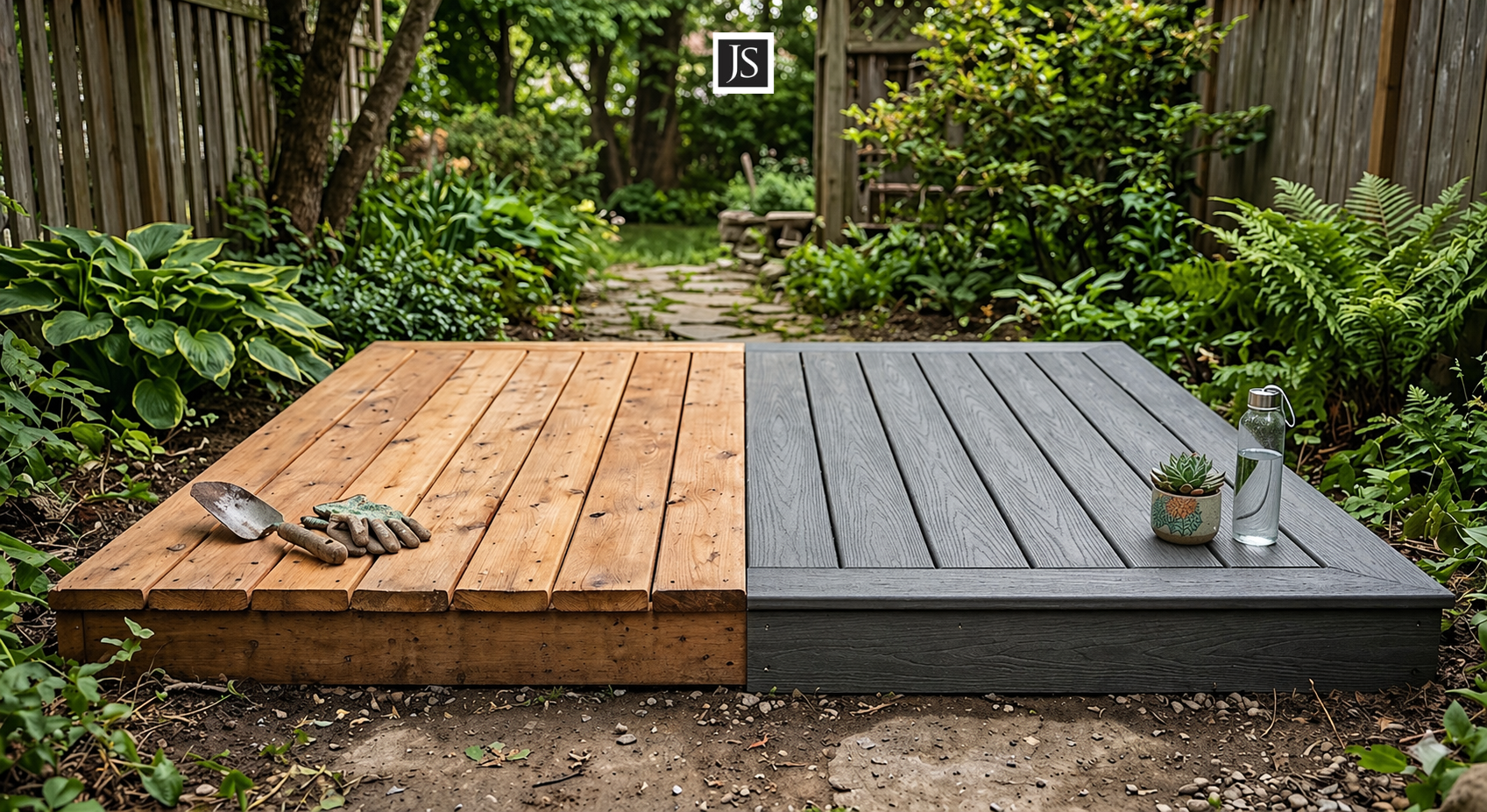
Wood and composite decking each have clear advantages, but they serve different priorities. Wood offers lower upfront cost, natural beauty, and easy customization, while composite delivers longer lifespan, lower maintenance, and better resistance to moisture and wear. Neither is automatically better for every project. The best choice depends on how much you value cost, convenience, aesthetics, and longevity.
If you're planning, look at the full picture before deciding. Consider your climate, future maintenance habits, how often you'll use the space, and whether your deck is part of a larger renovation. For those wanting help turning the decision into a well-built outdoor space, JS Decking & Renovation can support everything from design to composite deck installation and wood-based solutions. If you're ready to discuss your project, explore our services, browse the gallery, or contact our team to get started on a deck that fits your home and lifestyle.