5 Signs Your Deck Needs Repair Before It Becomes Dangerous
Your deck should be a haven for relaxation and fun. But over time, weather, moisture, and everyday use can quietly turn it into a problem waiting to happen. Here's the bright side: many deck issues start small with warning signs you can catch early on.
In this guide, we're going to talk about the five big signs that your deck might need some TLC before it becomes a real safety hazard. We'll also dive into what causes these issues, how to check for them, when it's time to call in the pros, and how regular maintenance can keep your family safe. If you've already noticed some changes, services like railing replacement and repair, or deck replacement and remodeling might be your best bet.
Just so you know, the Consumer Product Safety Commission has reported that deck collapses and flooring failures have led to thousands of injuries. So, this isn't just about looks—it's about safety. Reliable resources like the Consumer Reports deck safety guide and CPSC’s home safety tips can help you understand what to keep an eye on. And when you're unsure, getting a professional inspection is always a good idea.
Why Early Deck Repair Matters
Small Problems Can Become Big Issues
Decks face a lot of stress from sun, rain, and temperature swings, not to mention all the foot traffic. Even top-notch materials can start to weaken if you don't keep up with them. A minor loose screw today can lead to a major problem tomorrow.
That's why fixing little issues early on is a smart move. It's usually quicker, safer, and cheaper than letting things pile up until they need a big fix. By taking care of problems early, you can avoid major repairs and extend your deck's life by years. If your deck is showing multiple warning signs, a complete overhaul with options like composite decks or pressure-treated decks might be the way to go.
Local Climate Can Speed Up Wear
Moisture is a deck's worst enemy. In humid places, water can seep into joints and fastener holes, setting the stage for rot and rust. This is especially important for folks in places like Franklin, TN, where the weather can speed up wear and tear.
You can lower the risk by sealing your wood, cleaning off debris, and checking vulnerable spots every season. The University of Minnesota Extension explains that moisture management is key to preventing wood decay, which directly applies to decks. If your deck is aging, consider professional new deck installation to restore safety before things get worse.
1. Loose or Wobbly Railings
Why Railing Movement Is a Red Flag
Railings should be rock-solid. If they move when you lean on them or guide a child near them, that's a major warning sign. Loose railings are dangerous because they're often used for balance on stairs and elevated areas.
According to Consumer Reports, loose railings can come from rusted fasteners, rotted wood at connection points, or shifting posts. The issue might look minor, but the connection can fail suddenly under pressure. Don't delay railing repairs, especially if kids, older adults, or guests use your deck often.
What to Check During a Quick Inspection
Walk around your deck and gently push on each railing section. Look for movement at the base and around stair railings. Check for rust, missing screws, or split wood. Multiple loose areas could mean bigger structural problems.
Often, the safest fix is more than tightening a few screws. Professional railing replacement and repair can ensure a solid connection, update old hardware, and even give your deck a fresh look. If you're reimagining your deck as part of a bigger outdoor project, consider pairing it with outdoor living spaces, planning for a more functional setup.
2. Warped or Cracked Boards
How Board Damage Can Trip You Up
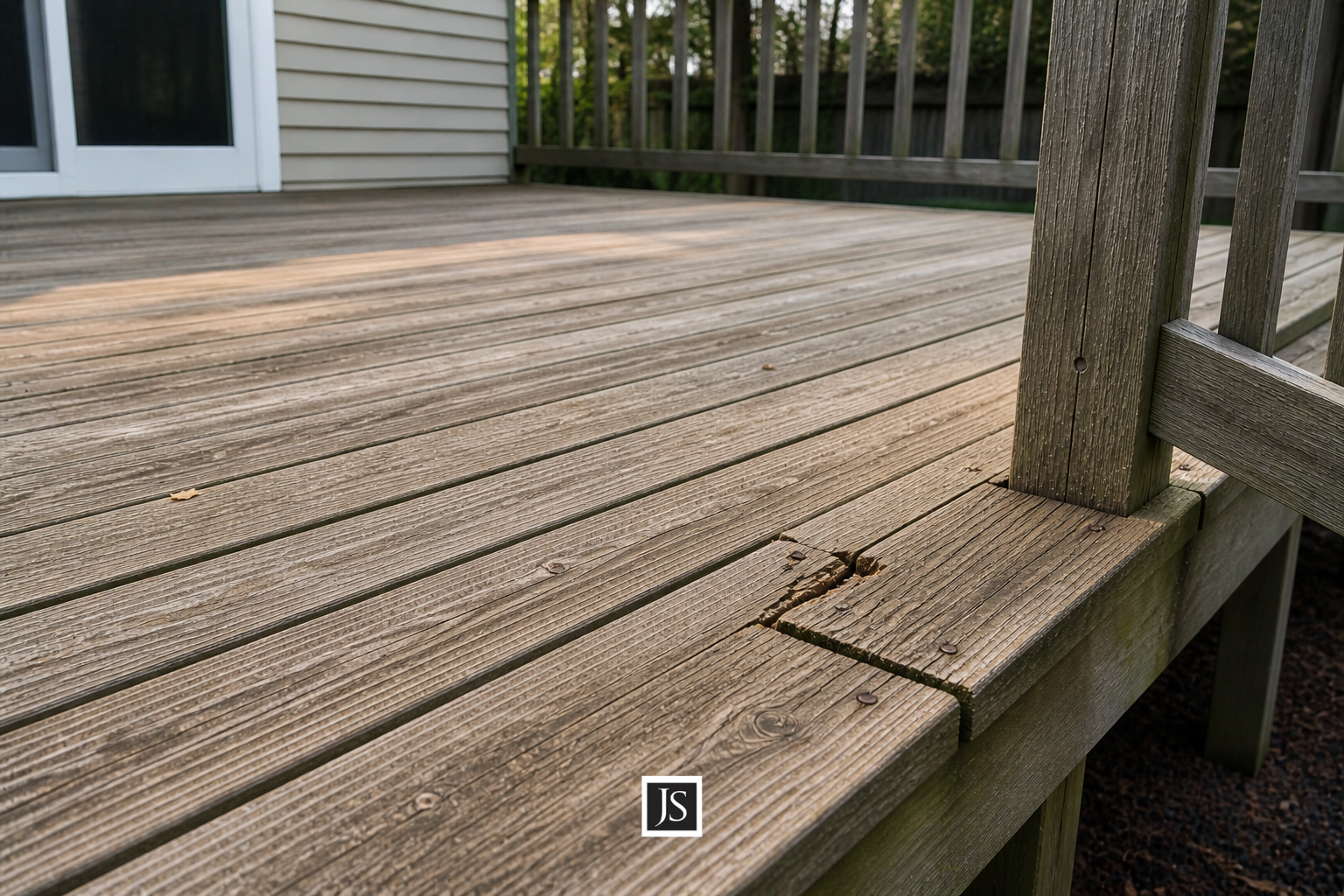
Warped boards aren't just ugly; they can be dangerous. Twisted, cupped, or cracked boards create uneven surfaces that can cause trips and falls. Even slight changes in board height can be hazardous, especially when people are carrying things or walking in low light.
Consumer Reports notes that moisture and sun exposure cause wood to warp and crack over time. This is a clear sign your deck is aging and might need some repairs. Boards lifting at the edges or showing long splits may not be safe anymore.
How to Tell Cosmetic Wear from Real Damage
Some surface wear is normal in older wood decking, but deep cracks, splinters, and boards that don't lie flat need attention. If the damage is isolated, replacing a board might be enough. But if it's widespread, you might have a bigger issue like poor drainage or sealing problems.
Regular cleaning and sealing help, but they can't reverse major wear. That's why deck inspections should check the walking surface, not just the railings or stairs. For long-term options, our wood vs. composite decking guide can help you decide whether to repair or replace.
3. Soft or Spongy Wood
Why Softness Often Means Rot
If your wood feels soft underfoot, it's a sign that decay has started. Rot can hide below the surface, especially near corners and areas that stay damp. The deck might look fine from afar, but the structure could be compromised.
This is a crucial sign because rot spreads. A single soft board might be fixable, but a soft frame or support beams may indicate a bigger safety issue. Articles from sources like All Hands On Deck often show that softness means moisture-related problems.
How to Test for Soft Spots Safely
Be careful when walking on the deck and press gently with your foot in different spots. Focus on areas near planters, downspouts, or where debris collects. If a board compresses or bounces, that area needs a closer look. Don't keep testing if the spot feels unstable.
Soft spots are common in humid climates and shady areas. The best response is to block off the area, stop using it if needed, and schedule a professional evaluation. Sometimes, replacing boards solves the problem. Other times, a deeper repair, deck replacement, and remodeling might be necessary.
4. Rusted or Exposed Hardware
Why Fasteners Matter
Many focus on boards and railings but overlook the hardware holding them all together. Nails, screws, and brackets play a key role in deck strength. If they rust or pull loose, the deck can shift unexpectedly.
Consumer Reports highlights rusted hardware as a major warning. Corrosion weakens connections and leads to fastener failure. This is common in older decks or wet climates. Exposed metal that changes color, flakes, or streaks in wood should be checked.
What Corrosion Can Tell You
Rust often means water is getting where it shouldn't. If multiple fasteners are corroded, there could be a drainage issue or sealing failure, causing damage. Fixing it might mean more than swapping screws—improving moisture control and replacing connectors might be necessary.
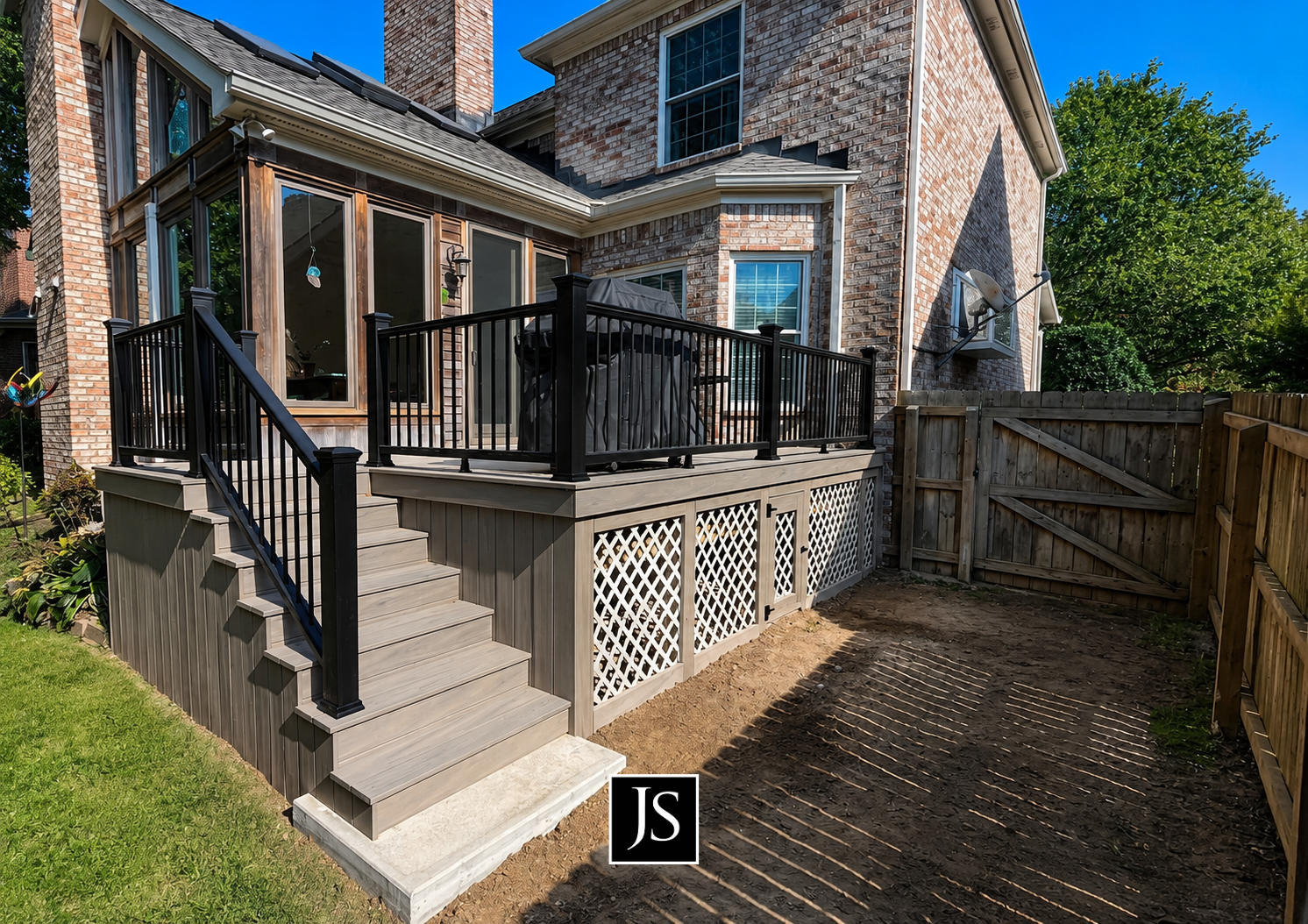
For a more durable upgrade, consider corrosion-resistant hardware and materials. Systems like Trex decks and railings can reduce future maintenance while boosting appearance. To see what upgrades can look like, check out our gallery before scheduling service.
5. Visible Sagging or Uneven Structure
What Sagging Means
A deck that looks sloped or uneven isn't something to ignore. Sagging often points to issues like weakened joists or damaged beams. Water damage is another common culprit that reduces framing strength.
According to Consumer Reports, visible sagging often indicates support problems, and that’s a clear sign to call in a pro. Sagging might start as a subtle dip, but it can get worse over time. The longer the issue goes unaddressed, the more likely other components will fail.
How to Spot Sagging Early
Check your deck from various angles, including from your yard and inside your home. Notice if the deck lines are level or if some areas dip. While using the deck, pay attention to bouncing or creaking in one section. These are signs the structure needs attention.
If sagging combines with soft wood, loose railings, or rusted hardware, the deck might need extensive repairs. Sometimes, a full rebuild is the best solution. Understanding deck framing and stability is crucial because structural integrity supports everything else.
How to Inspect Your Deck Before Problems Get Worse
Use a Seasonal Inspection Routine
The safest deck owners inspect regularly. Check your deck at least once a year, preferably in spring, before heavy use. Also, do a quick visual check after big storms, especially if wind or debris might have impacted the structure.
During inspection, look at the surface, railings, stairs, support posts, and connection points. Note any changes since the last season. Even minor changes can reveal a developing problem before it becomes expensive. If you're unsure, a contractor can help.
Follow a Simple Deck Inspection Checklist
A practical checklist makes inspections easier. Start with the walking surface and note any cracks, warping, or soft spots. Move to the railings and test their firmness. Then examine hardware, fasteners, stair treads, and posts for rust or decay. Finally, check underneath the deck for signs of moisture or damage.
For those wanting a safer outdoor environment, combine inspection with planning. Services like outdoor living spaces or gazebo and pergola construction can enhance the area after repairs, especially if shade or weather protection is a goal.
When DIY Repairs Are Appropriate and When to Call a Professional
Safe Tasks for Homeowners
Some minor maintenance is doable for handy homeowners. Cleaning the deck, clearing debris, applying sealant, or replacing a loose board can be DIY tasks if they're not structural. If the problem is purely cosmetic, DIY might work.
Even simple repairs should be approached with care. If you're uncertain about the damage, pause and get expert advice. A small repair can hide deeper issues beneath the surface.
When to Call a Contractor
Call a professional if you see widespread rot, sagging, unstable railings, major hardware corrosion, or movement in posts and beams. These are safety issues, not just maintenance tasks. A contractor can assess load-bearing concerns and recommend the best materials.
For those wanting a durable upgrade, professional composite deck solutions or a rebuilt pressure-treated structure might offer better long-term value than temporary fixes. If the deck is beyond repair, a replacement can improve layout and curb appeal.
Real-World Example: Catching Rot Before Collapse
What One Franklin Homeowner Discovered
Recently, a homeowner in Franklin found a few soft spots during a spring check. At first, the deck looked fine, but one area felt slightly spongy. A closer look revealed extensive rot in several support beams caused by hidden moisture.
Because they checked early, the issue was fixed before anyone got hurt. The framing was repaired, the moisture source corrected, and the deck's safety restored. This outcome shows why annual inspections matter. Small warnings can prevent big failures when taken seriously.
Why Real Stories Make a Difference
Real examples show that deck problems aren't just theory. It's easy to ignore a wobble or crack when the deck seems fine, but stories like this highlight how quickly things can change. A deck is a system, and once one part starts failing, others are strained.
If you notice multiple issues, it might be time to explore a replacement rather than patching. Professional advice can help decide if repair is enough or if a new deck is safer and more cost-effective.
Frequently Asked Questions About Deck Repair
How Often Should I Inspect My Deck?
Inspect your deck at least once a year, preferably in spring. Also, inspect after severe weather or if you notice changes in how the deck feels underfoot. If your deck is older or exposed to moisture, more frequent checks are wise.
Can I Repair My Deck Myself?
Minor maintenance tasks might be DIY-friendly, but leave structural repairs to the pros. If railings are unstable, boards feel soft, or sagging is visible, the risk is too high for a casual fix. Safety comes first.
How Do I Know Whether to Repair or Replace?
If damage is localized, repair might be enough. But if there are multiple warning signs, moisture issues, or structural problems, replacement could be a better investment. A contractor can help assess the condition and recommend the best path.
Protecting Your Deck for the Long Term
Create a Maintenance Plan You’ll Stick To
The best way to avoid deck problems is to make a maintenance routine. Keep the deck clean, remove leaves, check for loose connections, and reseal wood as needed. These tasks take less time than dealing with big repairs or emergencies later.
Choosing materials and designs that suit your climate and usage helps. Upgrading to modern materials or adding protective features can reduce wear. Thoughtful design choices now can save headaches later and improve your outdoor living experience.
When to Upgrade Instead of Patching
If your deck is old, frequently damaged, or hard to keep safe, upgrading might be smarter. Replacement lets you fix design flaws, improve drainage, and use materials that resist moisture. It can also create a better space for gatherings and relaxation.
If you're ready to explore options, JS Decking & Renovation can help assess your current deck and plan the safest solution. Whether you need repairs, a railing fix, or a complete rebuild, acting early protects your investment. Contact us to explore your options and keep your outdoor space safe and enjoyable.